
Beyond Keywords: The Era of Engagement
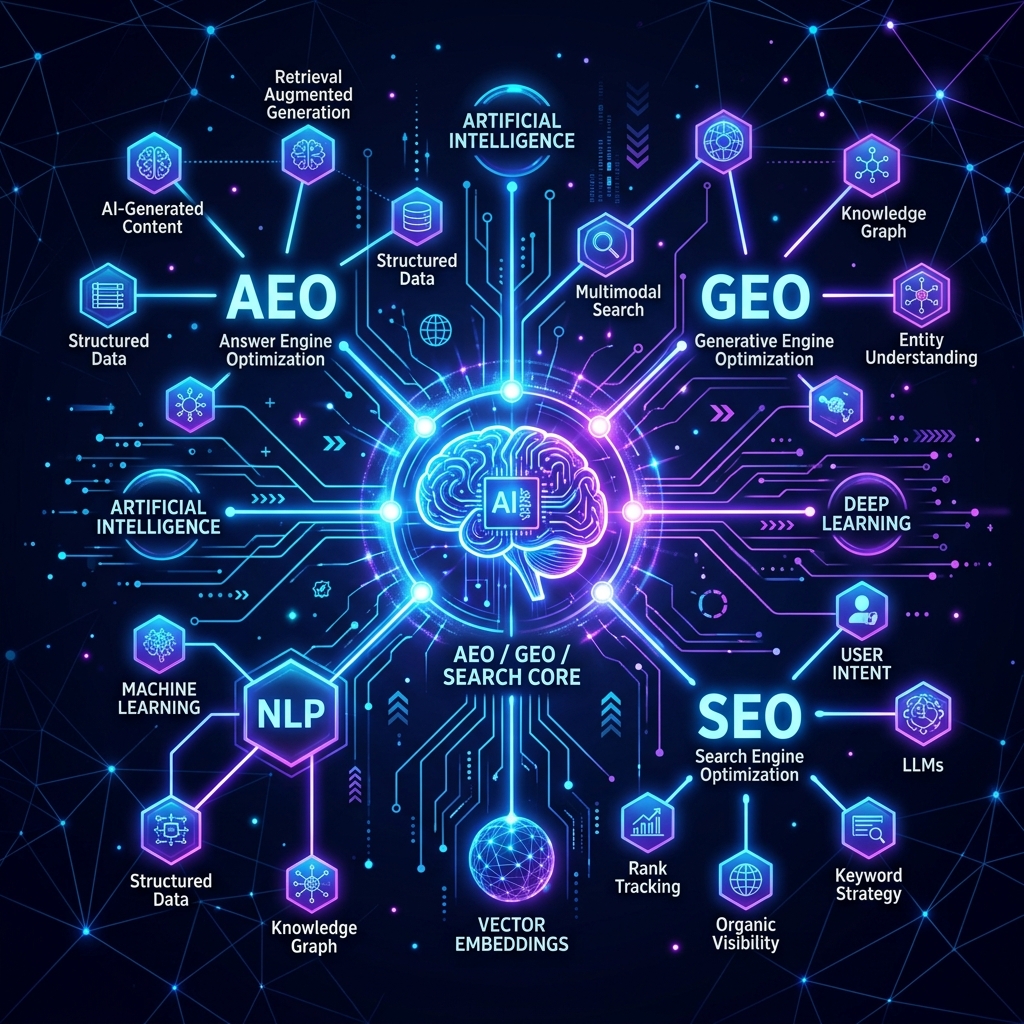
In the early days of SEO, ranking was easy: just repeat your keyword as many times as possible. Today, Google's algorithms (like RankBrain) are far smarter. They don't just look at what's on your page; they look at how users *interact* with it. The most important metric in this new era is 'Dwell Time.'
Dwell Time is the length of time a user spends on your page before clicking back to the search results. If a user lands on your page and leaves in 5 seconds, Google assumes your content was irrelevant or low-quality. To rank in 10,000 users per month, you must keep them on the page longer.
Psychology 101: Reducing the 'Cognitive Friction'
Why do users leave? Often, it's 'Visual Overload.' When a visitor sees a massive wall of text without knowing how long it will take to finish, they feel overwhelmed. Their brain calculates the 'Cost of Entry' as too high, and they bounce.
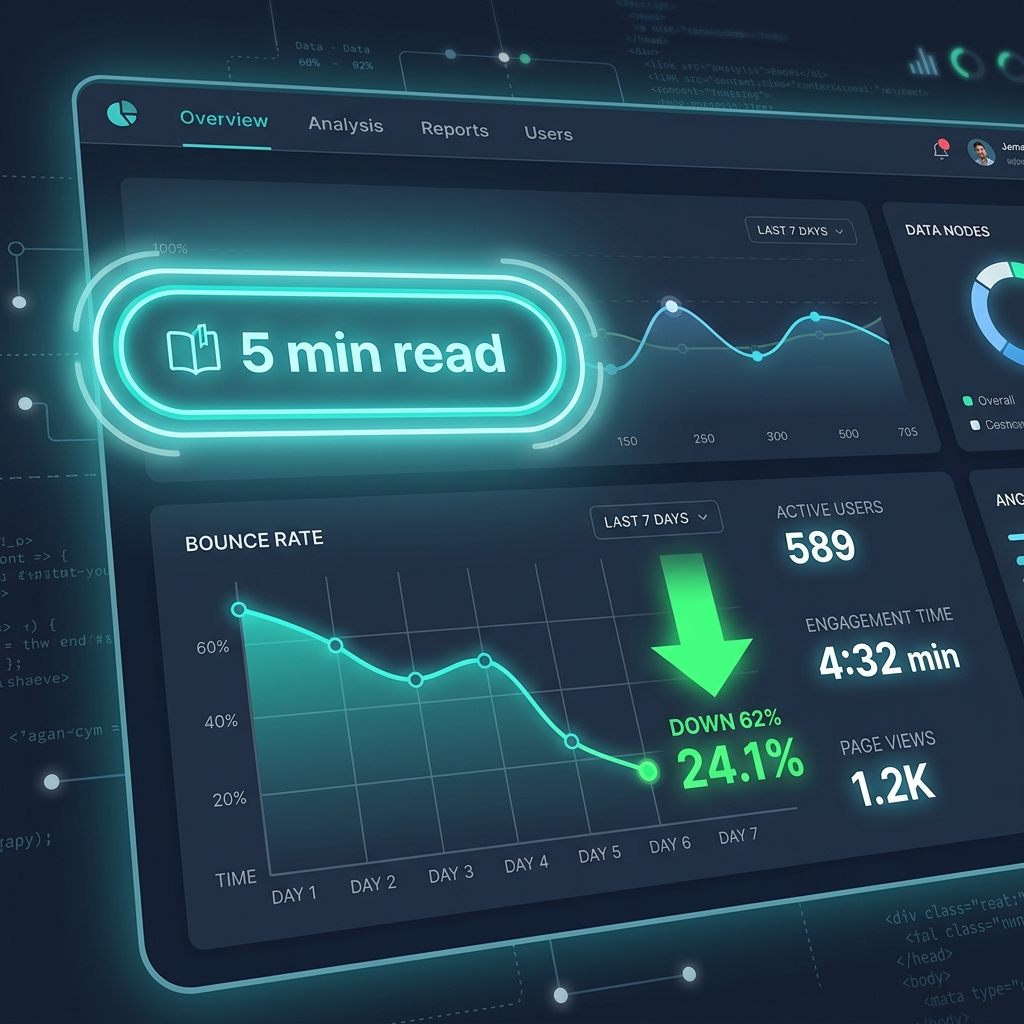
Adding a '5 min read' badge at the top of your post acts as a psychological 'entry permit.' It tells the user exactly what to expect, reducing their anxiety and making them more likely to start reading. Data shows that posts with clear reading time estimates have a 25-30% lower bounce rate than those without.
Optimizing for the 'Skimmer' vs. the 'Deep-Diver'
Not every user reads every word. In fact, 79% of web users scan a page before reading. To capture both audiences, you need a 'Dual-Track' content strategy: 1. **The Fast Track**: Use bold headings, bullet points, and short lead paragraphs for the skimmers. 2. **The Deep Track**: Provide detailed, high-value technical sections for those who decide to commit.
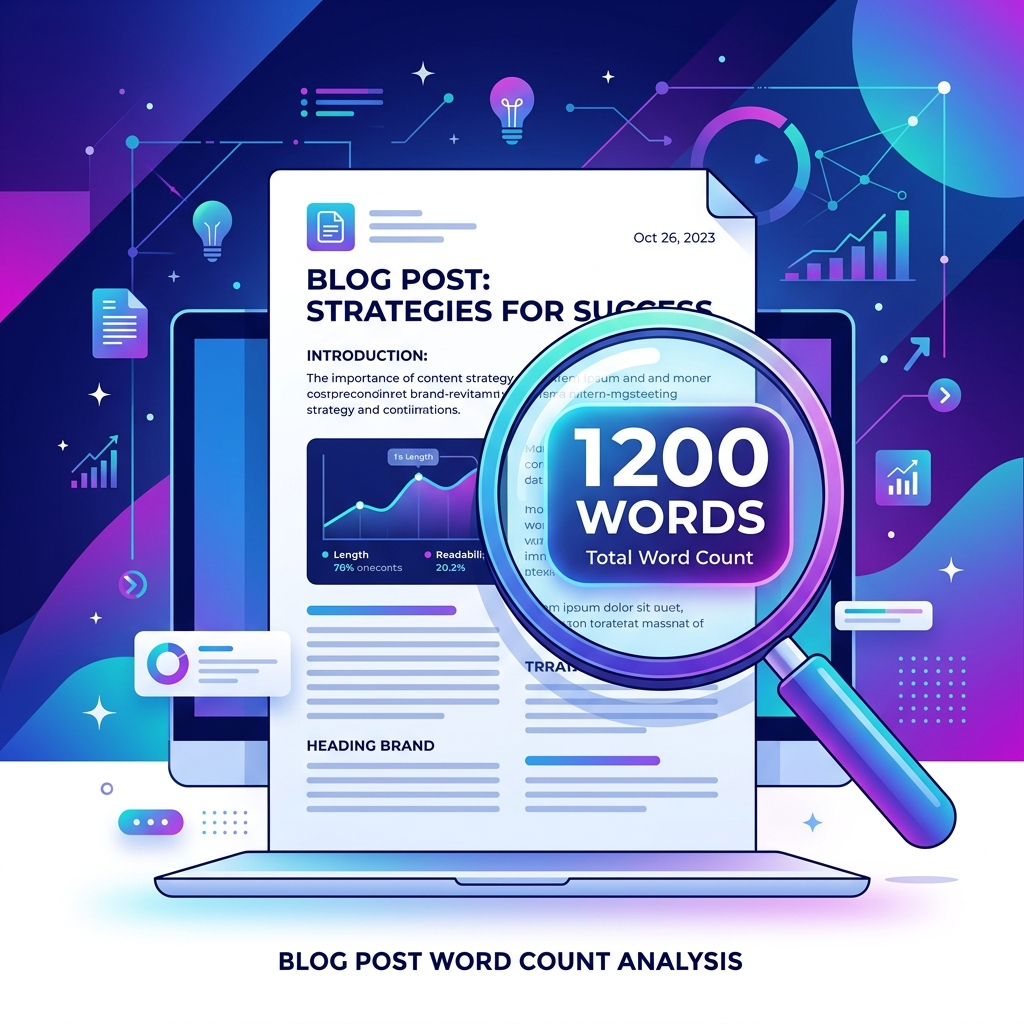
Your reading time calculation should be based on a conversational WPM (roughly 225-250) to ensure the estimate is honest. Overpromising a '2 min read' for a 2,000-word dissertation will only frustrate your users when they realize they're only halfway through after 5 minutes.
How to Measure Your Own Blog's Success
Use Google Search Console and Analytics to track your 'Average Time on Page.' If your 10-minute guide has an average time of only 45 seconds, you have a structural problem. You might need better 'Lead-ins,' more engaging visuals, or more frequent internal links to keep the journey going.
Internal links to relevant tools (like a word counter or a reading speed calculator) are powerful 'Engagement Anchors.' They transition the user from 'passive reading' to 'active doing,' which significantly increases their total session time.
Conclusion: Content is a Commitment
Writing for 10,000 users isn't about volume; it's about quality and transparency. By respecting your user's time and providing clear signposts, you build the authority needed to dominate your niche.
Why Website Reading Time is Essential for Modern Workflows
As digital environments become more complex, integrating efficient tools and practices is no longer optional. Concepts related to Website Reading Time form the backbone of productivity for many professionals. Whether you are managing content at scale or just trying to optimize your daily routine, understanding these nuances can save hours of frustration.
Many users overlook the subtle benefits of adopting streamlined processes. By leveraging right strategies, you not only improve speed but also enhance the overall quality of your output. It’s about working smarter, not harder, and making sure your digital footprint is optimized for both users and search engines.
Common Pitfalls and How to Avoid Them
One of the most frequent mistakes people make is relying purely on manual checks. Human error is inevitable, especially when dealing with large volumes of text or complex data structures. Automated tools and standardized guidelines are your best defense against these common oversights.
Another pitfall is inconsistent application of best practices. It is not enough to optimize one piece of content or one project; the rules must be applied universally across your digital assets. Establishing a solid routine ensures that quality never drops, regardless of the workload.
Future Trends to Watch
Looking ahead, the integration of AI and machine learning will further revolutionize how we approach these tasks. However, the foundational principles remain the same. A solid grasp of the basics will ensure you are well-prepared to adapt to new technologies as they emerge.
Stay informed by continuously exploring new tools and updating your skill set. The digital landscape rewards those who are proactive and adaptable. Keep experimenting, stay curious, and always seek ways to refine your approach.