The Evolution of Digital First Impressions
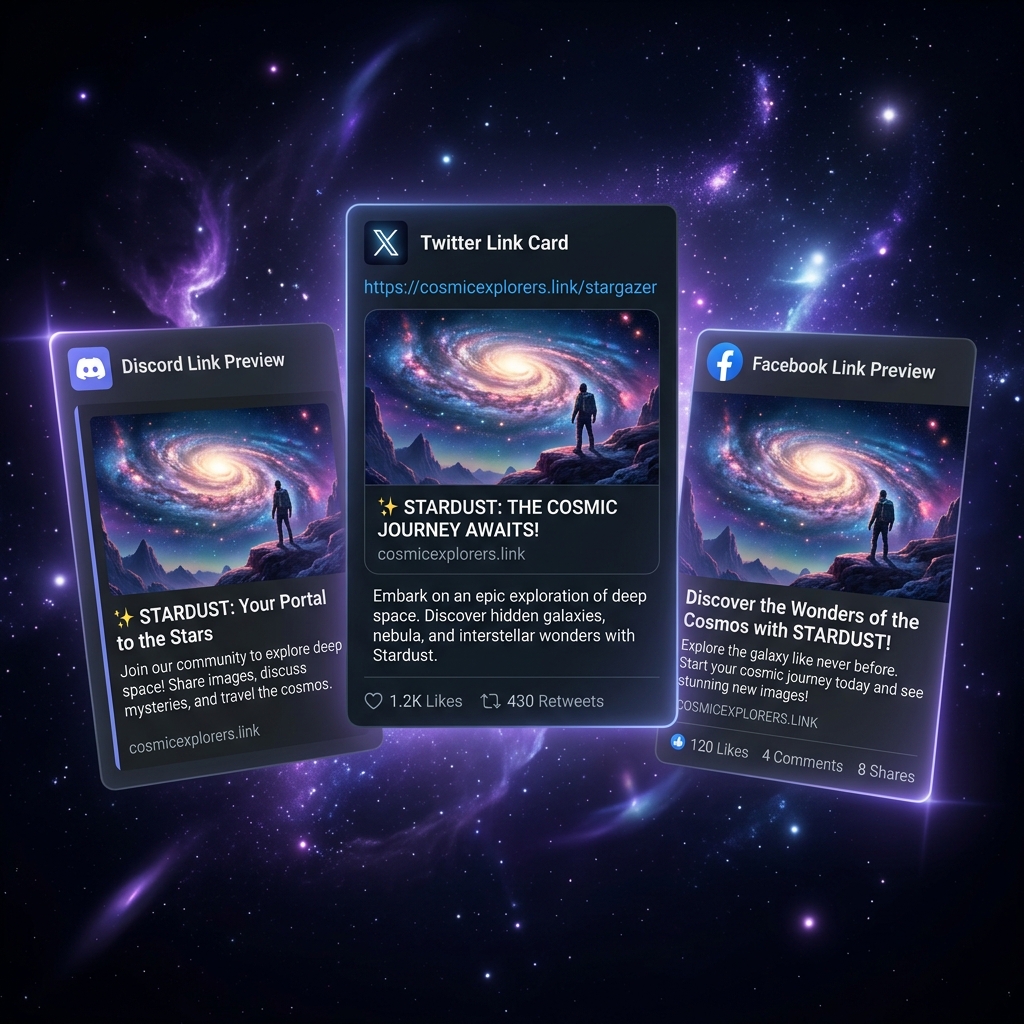
In 2026, a massive portion of your audience won't find you through a direct URL entry or even a Google search—they will find you through a link shared on Discord, Twitter (X), LinkedIn, or Facebook. When that link is shared, the platform automatically generates a 'Preview Card' (also known as a 'Snippet').
If you haven't defined your Open Graph (OG) tags, the platform's crawler will desperately scrape your page, often picking up a random, grainy logo or a piece of navigation text as the description. This looks unprofessional and kills your click-through rate (CTR). Open Graph is the protocol that puts you back in the driver's seat of your brand's social identity.
The 'Essential Four' Tags for Professional Sites
To achieve a premium look across all social networks, you must define these four tags in your website's `<head>` section. Neglecting even one can result in a broken or unappealing card:
1. **og:title**: This is your headline on social media. It should be catchy and slightly more aggressive than your SEO title (aim for 50-60 characters maximum). 2. **og:description**: This acts as your 'elevator pitch.' You have about two sentences to convince a user that the link is worth clicking. 3. **og:image**: The heavy hitter. Always use a high-resolution 1200x630 pixel image. If your image is too small, platforms will generate a tiny thumbnail instead of a full-width immersive banner. 4. **og:url**: This should be the 'canonical' link to your content, ensuring all social engagement (likes, shares) is attributed to a single source.
The Twitter Card (X) Advantage
While Open Graph covers most platforms, Twitter (now X) uses its own set of proprietary tags for tighter integration. By explicitly setting the `twitter:card` property to `summary_large_image`, you ensure your shared link takes up the full width of the user's mobile or desktop feed.
In a fast-moving timeline, visual space is the most valuable currency. A 'Large Summary' card provides 4x more visual area than a standard card, making it impossible to ignore. Combine this with a high-contrast featured image, and your social traffic will scale naturally.
Privacy, Meta Tags, and the Attention Economy
Meta tags are the 'metadata' of the web. They don't appear on the page itself, but they guide every interaction a user has with your content before they even land on your site. For students and creators building their first projects, mastering these tags is the fastest way to bridge the gap between 'hobbyist' and 'professional'.
At TextToolsStudio, we include these tags natively in our layout because we understand that great content deserves to be seen. Don't let your hard work go unnoticed because of a missing line of HTML.
How to Validate and Refresh Your Previews
Social platforms are notorious for 'caching' (storing) your metadata. If you change a title or an image but the old version still shows up in your shared links, you need to use a 'Debugger' tool. Use the official 'Twitter Card Validator' or 'Facebook Sharing Debugger' to force the platform to re-crawl your URL and update its display. This ensures that your very first share is always perfect.
Why Mastering Open Graph Tags is Essential for Modern Workflows
As digital environments become more complex, integrating efficient tools and practices is no longer optional. Concepts related to Mastering Open Graph Tags form the backbone of productivity for many professionals. Whether you are managing content at scale or just trying to optimize your daily routine, understanding these nuances can save hours of frustration.
Many users overlook the subtle benefits of adopting streamlined processes. By leveraging right strategies, you not only improve speed but also enhance the overall quality of your output. It’s about working smarter, not harder, and making sure your digital footprint is optimized for both users and search engines.
Common Pitfalls and How to Avoid Them
One of the most frequent mistakes people make is relying purely on manual checks. Human error is inevitable, especially when dealing with large volumes of text or complex data structures. Automated tools and standardized guidelines are your best defense against these common oversights.
Another pitfall is inconsistent application of best practices. It is not enough to optimize one piece of content or one project; the rules must be applied universally across your digital assets. Establishing a solid routine ensures that quality never drops, regardless of the workload.
Future Trends to Watch
Looking ahead, the integration of AI and machine learning will further revolutionize how we approach these tasks. However, the foundational principles remain the same. A solid grasp of the basics will ensure you are well-prepared to adapt to new technologies as they emerge.
Stay informed by continuously exploring new tools and updating your skill set. The digital landscape rewards those who are proactive and adaptable. Keep experimenting, stay curious, and always seek ways to refine your approach.