
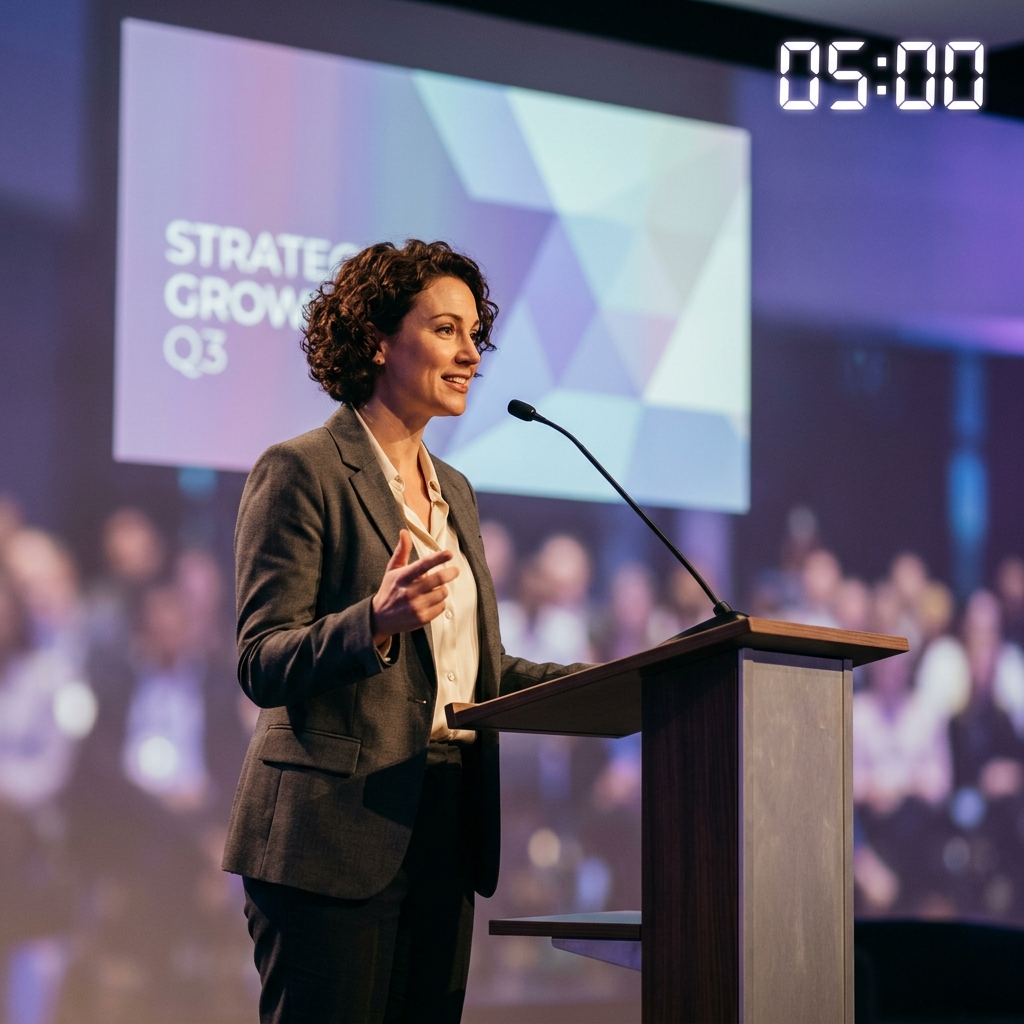
The Science of Speech Pacing
Communication is 7% words, 38% tone, and 55% body language. While we often obsess over 'what' we are saying, the 'how' is just as critical. In public speaking, timing isn't just about finishing on time—it's about managing the cognitive load of your audience.
The average person speaks at a rate of 120 to 150 words per minute (WPM). If you speak faster than 160 WPM, your audience will struggle to process complex ideas. If you drop below 100 WPM, they will lose interest. Finding your 'Sweet Spot' is the difference between a standing ovation and a room full of bored faces.
How to Calculate Your Presentation Length
A standard double-spaced page (about 250-300 words) usually takes about 2 to 2.5 minutes to speak at a conversational pace. However, this varies based on your 'Persona.' Are you an energetic startup founder or a deliberate university professor? Each role requires a different cadence.
To get an accurate estimate, take your total word count and divide it by your target WPM. For example, if you have a 1,500-word keynote and speak at 130 WPM, your base time is roughly 11.5 minutes. But wait—you must account for pauses, transitions, and slide changes.
The 'Power Pause' and Visual Synchronization
Never underestimate the power of silence. A 3-second pause after a major revelation allows the audience to 'catch up' emotionally. When calculating your total time, you should add a 10-15% buffer for these intentional silences and for the natural reaction time of your audience (laughter, applause, or nods).
If you are using slides, each transition typically adds 5-10 seconds of 'dead air' where you aren't speaking as you move your clicker and orient the audience to the new visual. Professional speakers plan for these micro-delays to ensure they never go over their allotted room time.
Top 3 Tips for Perfect Timing
1. **Internalize, Don't Memorize**: When you memorize word-for-word, you tend to speak faster. If you internalize the 'points' instead, your pace becomes more natural and flexible. 2. **Practice with a Stopwatch**: Don't just read the speech—act it out. Move your hands, walk the stage, and time the gaps. 3. **The 20% Rule**: If you have a 20-minute slot, aim for a 16-minute talk. This leaves room for Q&A and ensures you don't 'eat' into the next speaker's time.
Conclusion: Be the Speaker Everyone Remembers
Great speakers don't rush. They own the air. By using a speaking time calculator during your preparation phase, you eliminate the anxiety of 'running out of time' or 'finishing too early.' Preparation leads to confidence, and confidence leads to impact.
Why Speaking Time Calculator is Essential for Modern Workflows
As digital environments become more complex, integrating efficient tools and practices is no longer optional. Concepts related to Speaking Time Calculator form the backbone of productivity for many professionals. Whether you are managing content at scale or just trying to optimize your daily routine, understanding these nuances can save hours of frustration.
Many users overlook the subtle benefits of adopting streamlined processes. By leveraging right strategies, you not only improve speed but also enhance the overall quality of your output. It’s about working smarter, not harder, and making sure your digital footprint is optimized for both users and search engines.
Common Pitfalls and How to Avoid Them
One of the most frequent mistakes people make is relying purely on manual checks. Human error is inevitable, especially when dealing with large volumes of text or complex data structures. Automated tools and standardized guidelines are your best defense against these common oversights.
Another pitfall is inconsistent application of best practices. It is not enough to optimize one piece of content or one project; the rules must be applied universally across your digital assets. Establishing a solid routine ensures that quality never drops, regardless of the workload.
Future Trends to Watch
Looking ahead, the integration of AI and machine learning will further revolutionize how we approach these tasks. However, the foundational principles remain the same. A solid grasp of the basics will ensure you are well-prepared to adapt to new technologies as they emerge.
Stay informed by continuously exploring new tools and updating your skill set. The digital landscape rewards those who are proactive and adaptable. Keep experimenting, stay curious, and always seek ways to refine your approach.